Energy Independence in Illinois: How to Be Ready Before the Next Blackout
By Clean Energy Movement, November 23, 2026
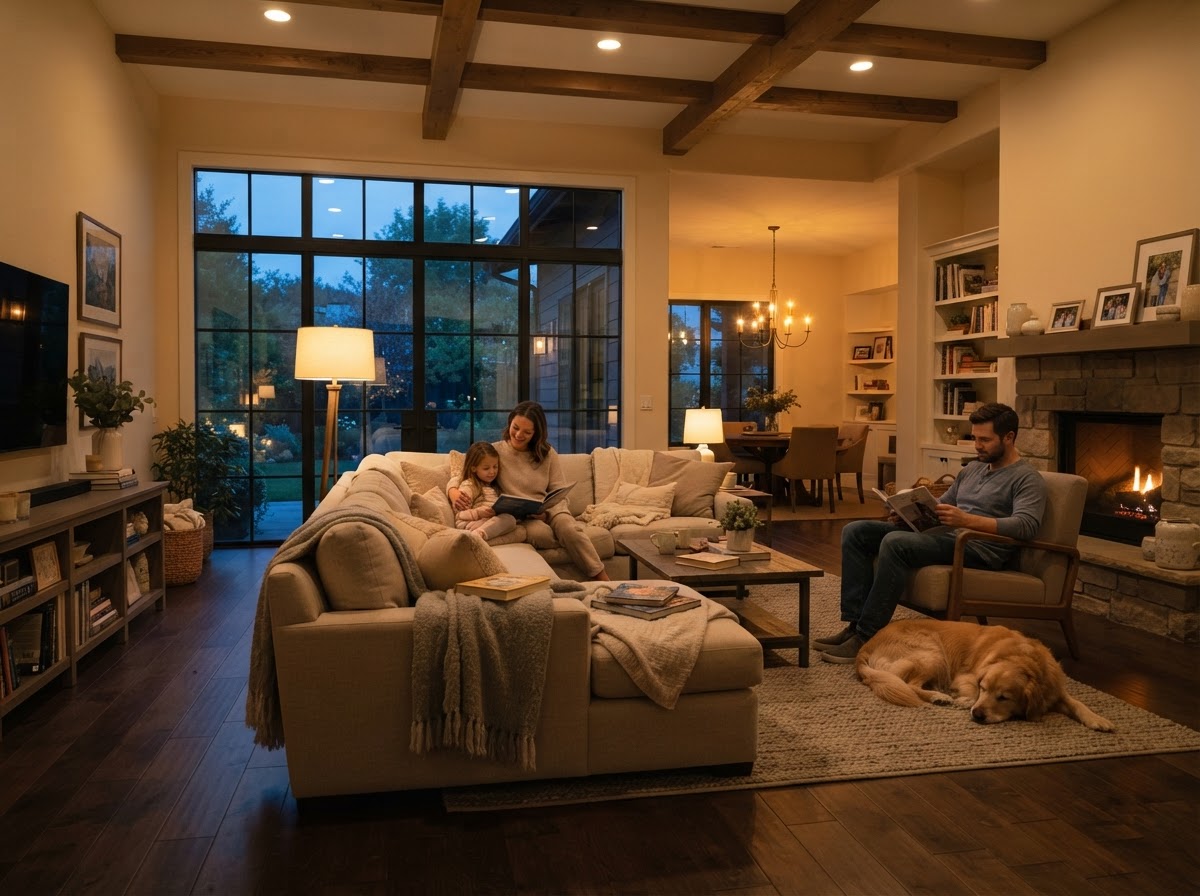
Everyone was talking about a blackout on November 17. It did not happen. That date was not a planned power shutdown. It was a one-minute test of the Emergency Alert System, run by FEMA and the FCC on radio and TV at about 2:20 p.m. Eastern Time. The U.S. Department of Energy's outage data that evening showed about 10,420 customers without power across the country, scattered local outages, not a national blackout. So the rumor was wrong. The worry behind it was not. In the same week, Illinois released its first long-range power plan, and the national grid watchdog released its winter outlook. Both say the same thing in different words: the grid can handle a normal winter, and it has less slack than it used to when the weather turns extreme, demand spikes, or a local piece of equipment fails. That is what energy independence is actually about. Not going off the grid, and not waiting for a date on a viral video. It is about your home still working when the grid does not, for a few hours or a few days, while everyone else waits for a restoration estimate.
What the reports actually say
Start with the winter outlook. NERC, the North American Electric Reliability Corporation, released its 2026 to 2027 Winter Reliability Assessment on November 18, 2026. Its headline finding is that adequate resources are available for a normal winter peak across the bulk power system. Winter capacity grew by 26 gigawatts since last winter, led by batteries, up 9.2 gigawatts, and natural gas, up 8.7 gigawatts. Then the caveat, in NERC's own terms: more extreme winter conditions extending over a wide area could result in supply shortfalls in some assessment areas. The one U.S. area it names at elevated risk in severe conditions is SERC-East, North Carolina and South Carolina. For MISO, the grid region that covers Ameren Illinois, NERC flags localized transmission constraints and load pockets that could prevent some areas from serving all load in certain conditions, but it does not expect a supply shortfall there. PJM, which covers ComEd territory in northern Illinois, is not named as a shortfall risk this winter. Illinois' own numbers are tighter over the longer term. The state's first Integrated Resource Plan, released November 16, 2026, projects a 3.91 gigawatt capacity shortfall in Ameren's zone for 2030 once out-of-state capacity is set aside. The draft Resource Adequacy Mitigation Plan released the same day recommends keeping 11 oil- and gas-fired peaker plants running until May 31, 2033, instead of closing them in 2030 or 2031. Those are backup plants that fire up on the hottest and coldest days, exactly when blackouts are most likely. The state is not recommending new gas plants, and the coal closure goal for four plants by 2030 stays in place. Public comments on the draft plan are due January 15, 2027. None of that is a blackout forecast. It is a planning warning: demand, driven in large part by data centers, is growing faster than new generation and transmission are being built, and older plants keep retiring. The cushion shrinks a little every year.
What we have already seen in Illinois
You do not need a forecast to see the pattern. You have already lived through the pieces of it. On October 12, 2026, the U.S. Department of Energy issued an emergency order for the PJM grid, which covers ComEd territory. Expected demand hit about 111,500 megawatts on October 13, with 61,591 megawatts of generation out, and the system came within about 900 megawatts of its reserve margin on October 14. It was October, not a July heat wave, and the grid still needed emergency help. On July 1, 2026, ComEd sent critical-level alerts to customers on Chicago's West Side, in west and southwest suburbs, and later in the Joliet area. Demand on local transformers and distribution lines was approaching what that equipment can safely carry in extreme heat. No customers lost service during those alerts, and Illinois has not had a rolling blackout. But the alerts were about real local equipment, not a distant grid. A heat-stressed transformer in your neighborhood giving out at 4 p.m. on the hottest day is the realistic threat, and it is the one a home battery is built for. Behind both events is the same slow squeeze. ComEd expects about 3.1 billion dollars in data-center hookup costs, with only about 720.9 million dollars in deposits collected, a gap of about 2.4 billion dollars. The Department of Energy's 2024 transmission study says the country needs to at least double regional transmission capacity and quadruple interregional capacity by 2050, which implies about 5,000 miles of high-capacity regional transmission a year. Only 322 miles of new high-voltage lines were completed in 2024. Your bill is already carrying part of that cost. Capacity auction prices, the market where utilities reserve backup power for peak days, hit a record 333.44 dollars per megawatt-day for 2027 to 2028, up from 28.92 dollars for 2024 to 2025. ComEd's supply price is about 50 percent higher than two years ago.
What energy independence really means
Energy independence does not mean cutting the cord. Almost no Illinois home should try to run entirely on its own power, and no honest installer should sell you that. It means three things, in order. First, your home keeps working through an outage. Heat, food, water, phones, and information. In winter in Illinois, that starts with freeze protection: keep a trickle running on hot and cold faucets, know where your main water shutoff is, and keep the furnace blower running so pipes do not freeze. A burst pipe is the most expensive failure a winter outage can cause. Second, you make some of your own power, and you store it. Solar panels make power during the day. A battery stores it for the night, or for the hours the grid is down. A battery alone can carry a house through a short outage. Solar plus a battery can stretch that through a multi-day outage, because the panels refill the battery each day, weather permitting. Third, you stop depending on the grid's worst day. That is the part the grid reports cannot give you. NERC can say the system is adequate for a normal winter. It cannot say whether your street will lose power in an ice storm, or whether a transformer on your block will fail on a hot afternoon. Your own system can.
Solar and battery, or a generator
Most Illinois homeowners compare two options, and they solve different problems. A gas generator makes power as long as you have fuel, and it can run large loads. It is loud, it needs fuel stored safely, and it must never run indoors or in a garage, because carbon monoxide poisoning is a real and preventable risk in every major outage. It also does nothing for your electric bill on a normal day. A home battery is quiet, it runs indoors, it makes no carbon monoxide, and it works automatically when the grid drops. On a normal day, it can shift your power use to cheaper hours and capture Illinois incentives. Its limit is capacity: it holds a finite amount of energy, so you have to choose what it powers, and in a long outage you need solar to refill it, or the grid to come back. For many Illinois homes, the honest answer is solar plus battery, with the battery sized to the loads you cannot lose: the furnace blower, the refrigerator, lights, phones, router, and medical equipment. A portable power station can cover those essentials for a shorter outage, and it is a good first step if a whole-home system is not in the budget yet. A whole-home battery, wired through a transfer switch by a licensed electrician, can cover more circuits for longer. Do not size a system by a sales sheet. Size it by your loads, your furnace type, and how many days you want to be ready for. A gas furnace blower is a modest load. An electric furnace or heat pump is a large one, and a portable station will not carry it. Check the nameplate on your equipment, and get the sizing in writing before you sign.
The Illinois part: what the state will help pay for
Illinois will help pay for storage, but the rules matter, and they have changed. The utility storage rebate pays up to 300 dollars per kilowatt-hour of battery capacity through December 31, 2029, stepping to 250 dollars per kilowatt-hour base in 2030. It requires a time-of-use or hourly rate, a smart inverter, and enrollment in utility dispatch. It is a ComEd and Ameren rebate, not an Illinois Shines benefit. Illinois Shines buys Renewable Energy Credits for solar power only. Batteries earn none. Standalone batteries, with no solar, are not rebate-live yet. ComEd filed proposed rules on September 4, 2026, ICC approval is pending, and applications are no earlier than January 1, 2027. Do not let anyone promise you a battery-only rebate today. Batteries added to existing solar do qualify, for Ameren systems installed after June 1, 2017, and for ComEd systems installed on or after August 11, 2022. One guardrail before you add storage in ComEd territory: adding a battery can trigger a new interconnection application that moves a grandfathered full-retail net metering customer onto Smart Solar Billing. Log your install year and billing status first, and ask your installer to confirm in writing that the add-on will not change your billing plan. Emerging virtual power plant programs may also pay homeowners for sharing stored energy during grid events, the exact kind of event this post is about. Those programs are still emerging in Illinois, so treat any payment figure as a projection, not a promise, until it is in your contract.
A preparedness checklist that does not require buying anything
A battery helps. It is not the whole plan. Ready.gov recommends supplies for several days, and the basics cost little. Water and food for several days, plus any refrigerated medication, with a thermometer in the fridge and the doors kept closed during an outage. Flashlights, extra batteries, a phone charger, and a NOAA weather radio, so you still get restoration estimates when the internet is down. Warm layers, blankets, and a plan for where everyone in the house sleeps if one room has to stay warm. Cash, in case card readers are down. A written list of who to call, including ComEd at 800-334-7661 to report an outage, or Ameren's outage line if you are downstate, plus your installer if you have solar and battery. And three rules that save lives in every outage: never run a fuel-burning generator, grill, or camp stove indoors or in a garage. Never touch a downed power line, and stay away and call 911 if you see one. Never plug a generator directly into a wall outlet. Backfeeding can kill a line worker and damage your home. A transfer switch or interlock, installed by a licensed electrician, is the safe way to connect backup power to your home wiring. Check your battery, if you have one, before the storm, not during it. Store a portable station indoors, in the conditioned part of the house, and top it up to full when a severe storm enters the 48-hour forecast. Lithium batteries can lose 15 to 20 percent of usable capacity in the cold, and many will not charge below freezing, so a battery brought in from a cold garage may need to warm up before it accepts a charge.
The bottom line
The November 17 blackout did not happen, and no agency is forecasting a nationwide blackout. That is worth saying plainly, because fear sells, and it sells the wrong things. What is real is slower and less dramatic: a grid with less slack, a state planning for a capacity shortfall by 2030, bills that keep climbing as the system gets more expensive to keep reliable, and local equipment that fails on the hottest and coldest days. Energy independence is the answer to that, not to a viral date. It is a home that makes some of its own power, stores it, and keeps the heat on, the food cold, and the phones charged when the grid cannot. Build it before you need it, size it to your actual loads, and get the Illinois paperwork and rebate rules right the first time.
Common Questions About Blackouts and Preparedness
No. November 17 was a one-minute FEMA and FCC test of the Emergency Alert System on radio and TV, at about 2:20 p.m. Eastern Time. The Department of Energy's outage data that evening showed about 10,420 customers without power, scattered local outages. No federal agency, grid operator, or utility announced a planned blackout for that day.
Sources
NERC, 2026 to 2027 Winter Reliability Assessment, released November 18, 2026; Illinois Commerce Commission, first Integrated Resource Plan, released November 16, 2026, and Illinois Power Agency and Illinois EPA, draft Resource Adequacy Mitigation Plan, released November 16, 2026; U.S. Department of Energy, Emergency Order No. 202-26-50, October 12, 2026; U.S. Department of Energy ODIN outage data, November 17, 2026; FEMA and FCC, Emergency Alert System test, November 17, 2026; ComEd critical-level alerts, July 1, 2026, and ComEd reliability data, EIA Form 861, 2024; U.S. Department of Energy, 2024 National Transmission Planning Study; Ready.gov, outage preparedness guidance.
By Clean Energy Movement