Do Solar Panels Work in Illinois Winters?
By Clean Energy Movement · October 16, 2026
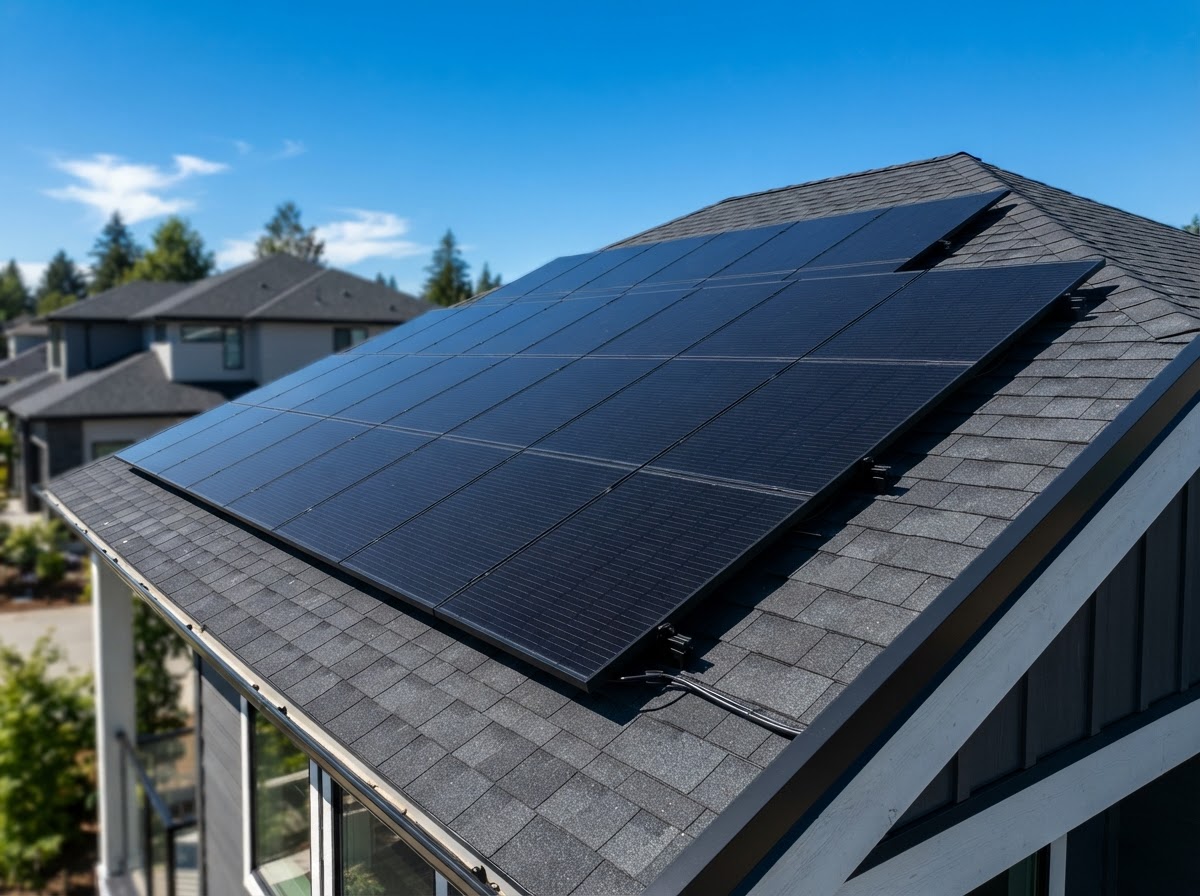
If you live in northern Illinois, you have seen the objection before you could name it: how can solar panels make sense in a state where the sun sets at 4:19 PM in December? It is the single most common question we hear about Illinois solar. The short answer: yes, solar panels work in Illinois winters. And the part people get wrong is what winter does to a system — it is almost never the cold.
The cold is the good part
Solar panels do not run on heat; they run on light. Manufacturers rate panels at standard test conditions: 1,000 watts per square meter of irradiance with the cell at 25°C (77°F). A panel's temperature coefficient — the relative change in output per degree — is negative: today's silicon modules typically sit between −0.25%/°C and −0.40%/°C, meaning efficiency rises as the cell gets colder than its rated temperature. A crisp, bright January day puts your panels closer to their rated conditions than a 95°F July afternoon, when roof-mounted cells can run far hotter than 25°C and shed efficiency accordingly.
What actually cuts winter output
Three things, none of them the cold: (1) Shorter days. The Chicago area gets about 9 hours of daylight around the winter solstice versus about 15 near the summer solstice. Fewer hours of sun, fewer kilowatt-hours. That is arithmetic, not equipment. (2) A lower sun angle. The winter sun rides low across the southern sky, so each square meter of roof intercepts less direct light. Systems account for this in the annual production model. (3) Cloud cover and snow. Overcast days trim production, and snow sitting directly on panels blocks light. Residential arrays are tilted, so after a light melt the snow typically slides off on its own. And snow on the ground has a silver lining, literally: high surface albedo means reflected light reaches the panels on clear days, and research on northern-climate PV systems finds meaningful performance gains from snow reflection.
Illinois is well within solar's proven territory
Sandia National Laboratories' PV performance modeling community notes that as of 2021, 31% of all operable U.S. PV capacity sat above 40°N latitude, and characterizes cooler operating temperatures as a favorable condition for solar — higher cell efficiency and slower degradation. Illinois spans roughly 37°N to 42.5°N. The far north is, in their framing, the new solar frontier.
The Illinois angle that matters
What changes your math is not winter; it is your rate structure. Illinois Shines pays for the clean energy your system produces regardless of season, and the DG rebate framework applies year-round. Post-2025, systems are designed around annual production: winter is the lean season, spring and summer are the fat season, and a well-sized system still covers its share of the year. Whether your numbers pencil comes down to your roof, your usage pattern, and your utility — which is exactly what a SunTest checks.
The bottom line
The “Illinois winters kill solar” objection gets the physics backwards. Panels like the cold. The season costs you hours of daylight, not performance — and the annual production number is what your incentives, your bill offset, and your installer should be built on.
Common Questions About Winter Solar
Panels are rated for snow loads typical of their installation zone, and residential racking in Illinois is engineered for Midwest snow. Snow sliding off tilted panels is normal and expected — most homeowners never touch their panels in winter.
Sources
MDPI Energies (2025): panel temperature coefficient range and standard-test-condition definitions; U.S. DOE OSTI: long-term photovoltaic performance in cold, snowy climates; Sandia PV Performance Modeling Workshop (May 2024): 31% of operable U.S. PV capacity above 40°N (EIA 2021 data).
By Clean Energy Movement